Department Overview
ABOUT US
The Department of Computer Science and Information Engineering (CSIE) at National Central University (NCU) was established in 1981 with the initiation of its graduate program. In 1988, the Ph.D. program began enrolling students. The undergraduate program was launched in 1992, completing a comprehensive academic system in computer science education and research. Currently, the department hosts 445 undergraduate students, 247 master’s students, 93 in-service master’s students, and 97 Ph.D. candidates. By 2014, the department had produced 1,399 undergraduate alumni, 1,291 master's graduates, 240 in-service master's graduates, and 157 Ph.D. alumni. Thanks to the efforts of faculty, staff, students, and alumni, the department has earned a distinguished reputation within Taiwan’s research universities.
OUR MISSIONS
Technological capabilities are essential to national competitiveness, and information technology is one of Taiwan’s key focus areas. As the information industry grows to replace traditional sectors and lead globally, the cultivation of skilled professionals and cutting-edge research becomes crucial. This is the responsibility of higher education institutions like ours.
Includes
- Cultivating innovative talents in information technology.
- Training professionals with technical expertise.
- Conducting forward-looking research in IT.
Our department is committed to academic independence, knowledge dissemination, and the development and transmission of information technologies.
EDUCATIONAL
OBJECTIVES
Undergraduate Program:
- Develop professional skills in independent thinking
- Foster teamwork and cooperation
- Promote a diverse and open learning attitude
- Encourage humanistic values and social care
- Expand global perspectives and innovation
In-Service Master’s Program:
- Train professionals in IT problem-solving
- Cultivate cross-disciplinary development and communication
- Foster talent with creative hardware-software integration skills
Ph.D. Program:
- Advance comprehensive knowledge in computer science
- Develop expertise in advanced IT
- Enhance interdisciplinary project management and communication
- Foster lifelong learning and innovative thinking
Graduate Institute of Software Engineering:
- Equip students with software R&D skills
- Encourage interdisciplinary project collaboration
- Promote a lifelong learning mindset
- Broaden international and innovative vision
CORE
COMPETENCIES
Undergraduate Program:
- Mathematical logic
- Implementation and verification
- Application of IT
- Organizational communication
- Teamwork and coordination
- Problem-solving
- Global perspective and lifelong learning
- Professional ethics and social responsibility
Master’s / In-Service Master’s Program:
- Professional IT knowledge
- Problem-solving with IT applications
- Communication and presentation skills
- Innovation and independent thinking
- Teamwork and collaboration
- Understanding IT trends and global issues
- Ethics and social responsibility
- Lifelong learning and personal development
Ph.D. Program:
- Identify and solve complex problems
- Professional IT knowledge
- Organisational communication
- Independent and innovative thinking
- Cross-disciplinary project management
- Insight into global IT trends
- Project planning and execution
- Lifelong learning and self-growth
Graduate Institute of Software Engineering:
- Software engineering planning and management
- IT applications and problem-solving
- Presentation and communication
- Innovation and independent thinking
- Teamwork and coordination
- Awareness of IT trends and global development
- Ethics and responsibility
- Lifelong learning and self-improvement
DEPARTMENT HISTORY
NCU’s graduate institute of CSIE was founded in 1981. The Ph.D. program was added in 1988 to train high-level researchers and educators. The undergraduate program began in 1992 to strengthen basic IT education. In 1996, the undergraduate program expanded to two classes per year to meet increasing industry demands. In 2001, the in-service master’s program was introduced to provide further education for professionals. In 2005, in response to policies from the Ministry of Economic Affairs, an embedded systems industry-focused master's program was established to bridge academia and industry. In 2006, recognizing the need for systematic software engineering education in Taiwan, the country’s first Graduate Institute of Software Engineering was launched. It shares resources with the CSIE department but also develops its own distinct goals and curriculum.
ACADEMIC FEATURES
- Each required and elective course is assigned a teaching assistant; required courses also include Ph.D. student TAs.
- Introduction to CS course covers the department’s four main research areas, related industries, and foundational knowledge.
- Robotics and programming courses are offered to undergraduates, integrating hands-on platforms from freshman year.
- Modular hardware-software platforms are self-developed and used in digital systems, embedded software, and system design courses.
- An early warning system is in place for students struggling academically.
- End-of-term course evaluations help improve teaching quality.
- Each class is assigned two academic advisors who provide tutoring and group meetings.
- Advisor meeting logs help track guidance effectiveness.
- Advisors meet with each student at least five times per semester.
- Students are encouraged to engage in community service, tutoring students in rural or underserved areas.
- Annual student music recitals are held to showcase talents.
- TA feedback sessions recognize outstanding performance and share experiences.
- Learning surveys are conducted in week 6 of each semester to guide course adjustments.
TRANSPORTATION

By Car
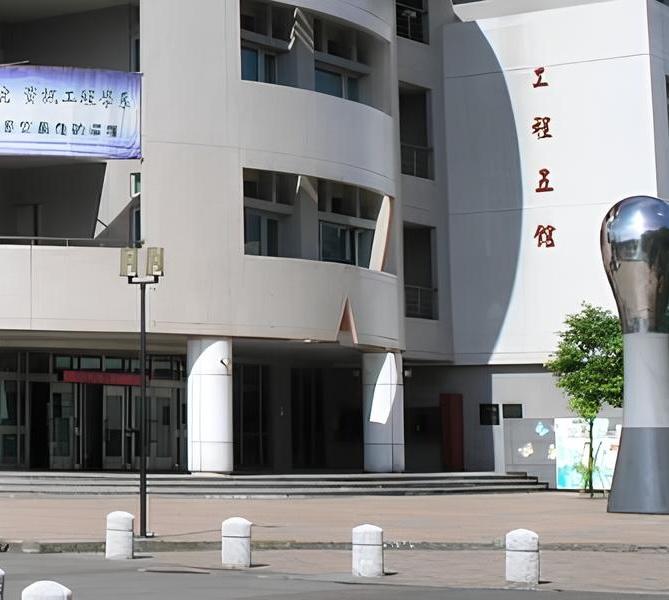
NCU is located near the Zhongli Interchange on National Freeway No.1 (Exit 62, toward Xinwu). Parking on campus costs NT$30 per hour. Parking is available near Engineering Building V, home of the CSIE department.


By High-Speed Rail
Get off at HSR Taoyuan Station:
- Take Bus 132 or 172 directly to NCU.
- Or transfer in Zhongli City by bus.
- Taxis are available at the HSR station.
- Driving from HSR station to NCU takes about 15–20 minutes.
HSR schedule:
THSR Website

By Bus
Take intercity buses to Zhongli Train Station or Xinwu Interchange, then transfer by local bus or taxi.
Bus information:
Kuo-Kuang eBus
Taoyuan Bus

By City Bus
From Zhongli Train Station, take Taoyuan Bus No.132 or Zhongli Bus No.133 to NCU.
City Bus Schedules:
- Summer (June 21–September 8)
- Semester (Until June 20)